In the manufacturing landscape, ensuring the quality and dimensional accuracy of parts is paramount. Traditional inspection methods, while effective, can be time-consuming and limited in their ability to capture complex geometries. This is where 3D inspection using 3D laser scanning emerges as a revolutionary solution — one that is rapidly moving from specialist metrology labs to the production floor across industries worldwide.
What is 3D Laser Scanning?
Imagine a technology that can create a digital replica of a physical object, capturing every nook and cranny with exceptional detail. That’s the essence of 3D laser scanning. A laser scanner emits a beam of light that strikes the object’s surface. The reflected light is then captured by a sensor, along with information about the beam’s travel time or angle — a process called triangulation.
By meticulously scanning the object from various angles, the scanner builds a vast collection of data points, forming a precise point cloud. This point cloud represents the object’s 3D geometry, allowing for comprehensive analysis and inspection.
| How Triangulation Works: Non-contact 3D scanners shine laser lines or structured light onto an object and detect the reflection with cameras. Because the laser source, the reflection point, and the camera form a triangle, the system can calculate the exact 3D position of each point on the surface — capturing geometry with sub-millimetre accuracy. |
Types of 3D Scanners Used in Inspection
Not all 3D scanners are the same. Choosing the right type is critical to inspection success:
• Laser Triangulation Scanners: Designed for high precision in controlled environments. Insensitive to vibration, ideal for complex shapes and reflective materials. Can capture up to 1.8 million data points per second.
• Structured Light (White Light) Scanners: Projects a pattern of light (fringes) to capture geometry. Highly accurate but may require surface preparation (powder coating) on reflective parts and is sensitive to ambient lighting.
• LiDAR / Terrestrial Laser Scanners: Best for large-scale environments — construction sites, infrastructure, industrial facilities. Captures 360° data at distances up to 350 metres.
• Handheld Metrology Scanners: Portable, handheld devices that bring scanning directly to the production floor without requiring parts to be moved. Minimal training needed.
• CT (Computed Tomography) Scanners: Uses X-rays to inspect the internal structure of a part — excellent for additive manufacturing and plastic injection moulded components.
| Accuracy Benchmark: Metrology-grade handheld 3D scanners achieve an accuracy range of 0.005mm to 0.050mm — less than the thickness of a human hair. For reference, ISO 17025-certified devices such as the HandySCAN 3D and MetraSCAN 3D series have demonstrated accuracy equivalent to blue-light tripod-mounted systems while cutting inspection time by up to 85%. |
Why Use 3D Laser Scanning for Inspection?
Traditional inspection methods often rely on physical gauges or coordinate measuring machines (CMMs). These techniques can be effective for simple geometries but become cumbersome and time-consuming for complex shapes. 3D laser scanning offers several decisive advantages:
• Speed and Efficiency: 3D scanners can capture vast amounts of data in a single scan, significantly reducing inspection time compared to traditional methods. Where CMM inspection may take hours, laser scanning often takes minutes.
• Accuracy and Precision: Modern 3D scanners boast high accuracy levels, capturing intricate details and minute deviations from design specifications. Full-surface inspection means no critical areas are missed through point sampling.
• Non-Contact Inspection: Laser scanners operate without physically touching the object, eliminating the risk of damage to delicate parts or flexible materials like thermoplastic elastomers (TPE).
• Versatility: 3D scanners can be used on a wide range of materials, from metals and plastics to soft and reflective surfaces — without requiring fixtures or special setups.
• Digital Documentation: The captured 3D data creates a permanent digital record of the inspected part, facilitating traceability, audit trails, and future reference.
• Full-Surface GD&T Analysis: Unlike CMMs that sample discrete points, 3D scanning enables GD&T (Geometric Dimensioning and Tolerancing) analysis across the complete part surface, enabling automated defect detection and colour-coded deviation mapping.
3D Laser Scanning vs. Traditional CMM: At a Glance
| Capability | Traditional CMM | 3D Laser Scanning |
| Full surface capture | No (point sampling) | Yes (millions of points) |
| Complex geometry | Limited | Excellent |
| Inspection time | Hours | Minutes |
| Contact with part | Yes (risk of damage) | No (non-contact) |
| Soft/flexible materials | Difficult | Capable |
| Reflective surfaces | N/A | With preparation or blue laser |
| GD&T Analysis | Manual setup | Automated via software |
| Typical accuracy | 0.001mm | 0.005–0.050mm |
| Cost per inspection (QC) | High labor cost | $1,000–$4,000 range |
Note: CMMs remain the gold standard for ultra-high precision measurement of a small number of critical dimensions. In modern quality labs, 3D laser scanning complements rather than fully replaces CMMs — each is assigned based on the inspection task at hand.
How Does 3D Inspection Using 3D Laser Scanning Work?
The 3D inspection process using laser scanning typically follows a structured workflow:
Step 1: Preparation
The object is positioned and secured on a stable platform. Reflective targets or markers may be placed on the surface to aid data alignment. For handheld scanners, the part can stay on the production floor — no need to move it to a metrology lab.
Step 2: Scanning
The 3D scanner captures data points across the entire surface. With handheld devices, operators move freely around the part. With turntable-mounted systems, the object rotates while the scanner remains fixed. Real-time feedback allows operators to immediately re-scan areas where data may be lacking.
Step 3: Data Processing
The collected point cloud is processed using specialised software. Noise is removed, multiple scans are aligned and merged, and the resulting 3D model is cleaned and prepared for comparison.
Step 4: Inspection and Analysis
The processed 3D model is overlaid against the original CAD design. Deviations are highlighted and quantified. This step enables full-surface GD&T analysis, tolerance verification, and defect identification — tasks that would take hours manually and are completed automatically in software.
Step 5: Reporting
Inspection reports are generated featuring colour-coded deviation maps that clearly visualise areas exceeding specified tolerances. These reports are audit-ready, shareable with customers, and can be archived as permanent digital quality records.
Industry Applications: Where 3D Laser Scanning Makes the Biggest Impact
1. Automotive Manufacturing
In automotive production, where high volumes amplify even minor deviations, 3D scanning accelerates part validation and tooling maintenance. Manufacturers can rapidly assess first article parts, monitor gradual tool wear over time, and verify dimensional consistency across production runs without interrupting workflows. These inspections help stabilise production and prevent downstream quality escapes.
2. Aerospace & Defence
Complex aerostructures, turbine blades, and precision fasteners demand inspection methodologies that match their geometric complexity. 3D laser scanning enables complete surface analysis of curved and sculpted surfaces that contact CMMs cannot efficiently measure. It also supports First Article Inspection (FAI) requirements under AS9102 and similar standards.
3. Medical Devices and Patient-Specific Implants
3D scanning is used to create customised prosthetics, orthotics, and patient-specific implants. It supports planning of complex surgical procedures and enables quality inspection of biofunctionalised surfaces that must meet tight biocompatibility and dimensional tolerances. Inspection reports provide traceability records essential for medical device regulatory compliance.
4. Oil & Gas and Heavy Industry
In refinery operations, 3D laser scanning is used for API 653-compliant tank inspections, pipeline verification, and as-built documentation of complex plant environments. High-definition scanners with Class 1 Division 1 ratings can scan hazardous zones remotely from up to 350 metres, eliminating the need for personnel to enter dangerous areas. Digital twin implementations in this sector have demonstrated a payback period of approximately 1.4 years, with maintenance cost reductions of 25–55%.
5. Construction and Infrastructure
From bridges and tunnels to commercial buildings, 3D laser scanning provides precise as-built documentation that supports clash detection, renovation planning, and structural monitoring. Scan-to-BIM workflows allow inspection data to feed directly into intelligent building models. Studies have shown that construction projects leveraging 3D scanning for progress monitoring achieve 8–15% cost savings and a 40% reduction in rework incidents, primarily through early problem detection.
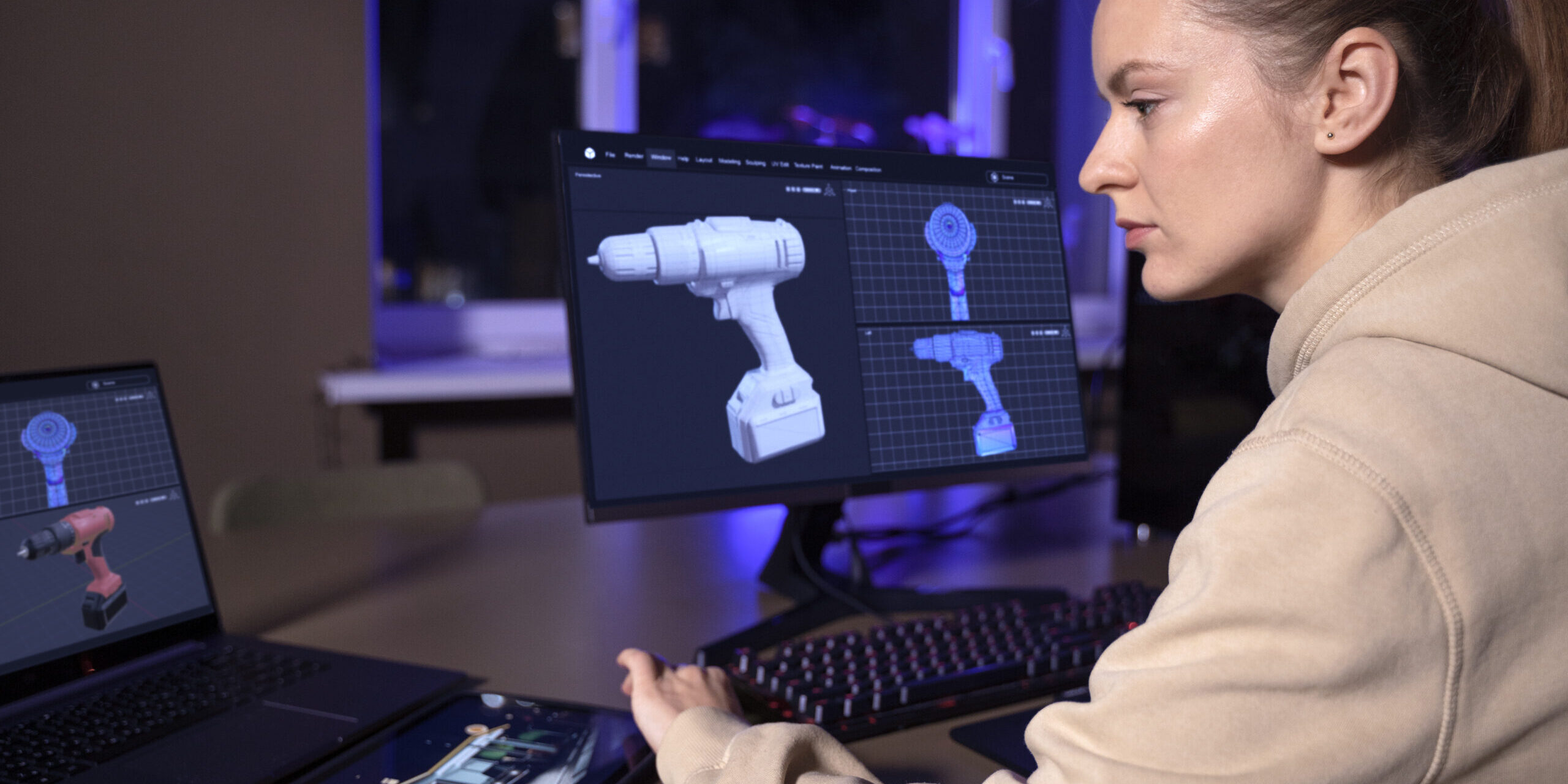
6. Reverse Engineering
Existing physical parts can be scanned to create digital 3D models, enabling the recreation or modification of their designs. This is invaluable for legacy components where original CAD data no longer exists.
7. Cultural Heritage Preservation
Historical artefacts and structures can be meticulously scanned for 3D documentation and long-term preservation. Scan data provides a permanent digital archive that can be used for restoration, academic research, and public engagement.
Challenges and Limitations to Consider
A balanced assessment of 3D laser scanning must include the real-world challenges that organisations face when adopting this technology:
• Data Volume: High-resolution scans generate very large datasets. Processing requires capable workstations, sufficient storage, and software trained for handling point cloud data efficiently.
• Surface Reflectivity: Highly reflective or transparent surfaces (polished metal, glass) can cause problems for standard laser scanners. Some systems require powder spray coating, which adds time and cleanup. Blue laser technology has reduced this issue significantly.
• Operator Training and Workflow Integration: While modern scanners are increasingly portable and user-friendly, transitioning quality teams from CMM-based workflows requires investment in training and process redesign.
• Initial Investment: Metrology-grade 3D scanners represent a significant capital investment. However, as the technology has matured, the cost-per-scan has fallen sharply, and service providers offer scanning-as-a-service pricing models for organisations not ready to invest in hardware.
• Internal Buy-In: Many decision-makers and QA teams are hesitant to adopt 3D scanning because they do not fully understand its benefits relative to CMMs. Building internal business cases and arranging demonstrations on real parts is the most effective way to overcome this barrier.
How to Choose the Right 3D Scanner for Your Inspection Needs
When evaluating 3D scanning solutions, ask yourself:
• Are my parts simple or complex? Will designs become more complex over time?
• Do I need to inspect on the shop floor or in a controlled metrology lab?
• What accuracy tolerances are required for my most critical features?
• Are there reflective, transparent, or flexible materials in my inspection scope?
• Is software compatibility with my existing CAD and ERP systems a requirement?
• Do I need ISO 17025 certification for traceability and audit purposes?
For most manufacturing environments, a metrology-grade handheld 3D scanner — ISO 17025 certified, with self-positioning capability and blue laser technology — offers the best balance of accuracy, portability, and versatility. These devices typically achieve an accuracy of 0.005–0.050mm and can operate on the shop floor without environmental stabilisation.
The Future of 3D Inspection
As 3D scanning technology continues to evolve, several developments are reshaping what is possible in quality inspection:
• AI-Driven Defect Detection: AI-powered defect detection algorithms are beginning to automate the classification of deviations, reducing the manual interpretation burden on quality engineers.
• Cloud Integration: Cloud-based platforms now allow scan data to be processed, shared, and reviewed remotely — enabling distributed QA teams to collaborate on inspection results in real time.
• Digital Twins and Predictive Maintenance: 3D scan data is increasingly fed into digital twin models, enabling predictive maintenance, lifecycle tracking, and continuous quality monitoring for complex assets.
• Automated Inline Scanning: Robotic scanning cells are emerging in high-volume manufacturing lines, enabling 100% 3D inspection of every part rather than statistical sampling — a step change in quality assurance.
• Democratisation of Metrology: Ongoing price reductions in LiDAR sensors and CMOS cameras are making metrology-grade accuracy accessible to a wider range of manufacturers, including SMEs.
| Market Outlook: The global 3D laser scanning market was valued at $8.15 billion in 2024 and is estimated to reach $8.84 billion in 2025, with continued growth projected across manufacturing, construction, and infrastructure sectors. Demand in construction alone has grown from 20% adoption in 2016 to over 57% within two years — and continues to accelerate. |
Conclusion
3D inspection using 3D laser scanning is no longer a niche technology reserved for aerospace or automotive giants. It is an increasingly accessible, ROI-positive tool that helps manufacturers of all sizes catch defects earlier, reduce inspection time, and build digital quality records that support both customer confidence and regulatory compliance.
Whether you are inspecting precision machined components, validating first article prototypes, or documenting complex structures, 3D laser scanning delivers a level of comprehensive, accurate, and traceable insight that traditional methods simply cannot match at scale.
| Ready to Explore 3D Inspection? RMTES provides advanced 3D laser scanning inspection services tailored to your manufacturing and quality assurance needs. Contact us to discuss how 3D scanning can be integrated into your quality workflow. Visit rmtes.com to learn more. |
FAQ
1. How accurate is 3D laser scanning for industrial inspection?
Modern metrology-grade 3D laser scanners offer accuracy between 0.005 mm and 0.050 mm, making them suitable for most manufacturing quality control applications. While traditional CMMs may achieve higher precision for critical dimensions, 3D scanning provides full-surface accuracy, ensuring no defects are missed.
2. Can 3D laser scanning replace traditional CMM inspection?
Not entirely. 3D laser scanning is best used as a complement to CMMs, not a replacement. It excels in inspecting complex geometries and full surfaces quickly, while CMMs remain ideal for ultra-high precision point measurements. Many manufacturers use both technologies together for optimal results.
3. What types of parts can be inspected using 3D scanning?
3D laser scanning can inspect a wide range of parts, including:
- Complex machined components
- Injection-moulded plastic parts
- Sheet metal and castings
- Soft or flexible materials
- Large structures like pipelines or tanks
It is especially valuable for freeform surfaces and intricate geometries that are difficult to measure using traditional tools.
4. How long does a 3D scanning inspection take?
Inspection time is significantly reduced compared to traditional methods.
- 3D scanning: Typically takes minutes
- CMM inspection: Can take hours
The exact time depends on part size and complexity, but overall, manufacturers report up to 80–85% faster inspection cycles.
5. Do parts need special preparation before 3D scanning?
In some cases, yes.
- Reflective or transparent surfaces may require a temporary matte spray coating
- Markers or targets may be applied for alignment during scanning
However, modern blue laser scanners reduce the need for surface preparation in many scenarios.
6. What industries benefit the most from 3D laser scanning inspection?
Industries that gain the highest value include:
- Automotive manufacturing
- Aerospace & defence
- Medical device manufacturing
- Oil & gas and heavy industry
- Construction and infrastructure
Any industry dealing with tight tolerances, complex geometries, or large-scale assets can benefit significantly.